Online Journal of Muhammadiyah Lumajang Islamic Institute
Journals
-

Journal of Madrasah and Islamic Instruction
RUSYDA: Journal of Madrasah and Islamic Instruction is a scholarly journal that focuses on the study of madrasah education and Islamic instruction in various contexts, both theoretical and practical. This journal serves as a platform for academics, researchers, and education practitioners to publish research findings, conceptual studies, and innovations in the field of Islamic education.
RUSYDA publishes articles covering the development of madrasah curricula, strategies and methods of Islamic instruction, Islamic education management, teacher professional development, as well as the integration of Islamic values in the learning process. The journal also welcomes interdisciplinary studies relevant to the dynamics of Islamic education at local, national, and global levels.
By upholding academic quality and a rigorous peer-review process, RUSYDA is committed to becoming a credible reference source in the development of madrasah education and innovative, inclusive, and sustainable Islamic teaching practices.
-
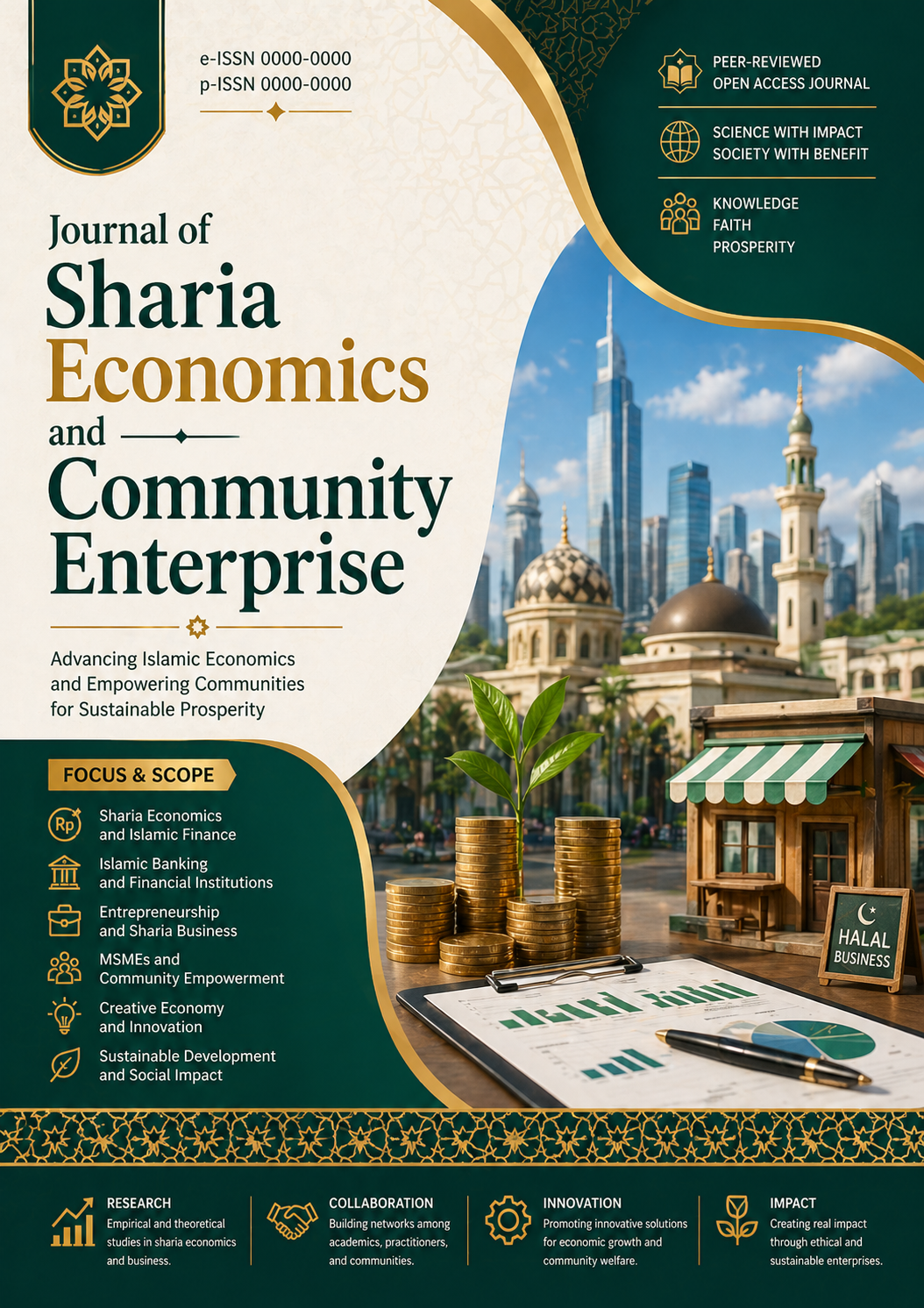
Journal of Sharia Economics and Community Enterprise
Journal of Sharia Economics and Community Enterprise is a scientific journal that focuses on the development of Islamic economics studies and community-based enterprise empowerment. This journal serves as a publication platform for academics, researchers, practitioners, and observers of Islamic economics to present empirical research findings, conceptual studies, and critical analyses related to the dynamics of Sharia economics across various sectors.
The scope of this journal includes Islamic economics and finance, Islamic banking and financial institutions, Sharia-based entrepreneurship, MSME development, the creative economy, and community economic empowerment through community-based approaches. In addition, the journal welcomes interdisciplinary studies that connect Islamic economics with social, cultural, and sustainable development aspects.
With a commitment to academic quality and a rigorous peer-review process, this journal aims to become a leading reference in the advancement of both the theory and practice of Islamic economics, as well as in strengthening the role of communities in promoting equitable and sustainable economic independence.